
Hear it both ways
Every example below is one track twice — the mix as it arrived, and the master that left this room. Both are matched to the same perceived loudness (RMS), so the only thing that changes when you switch is the mastering. Loud sounds better for about four seconds. Matching the levels takes that off the table.
Use headphones or speakers you know. Press play, then switch between Mix and Master while it runs — both versions are playing in sync, so the change lands instantly.
All examples mastered on the chain described above.
All samples used with permission.
No audio? Check that your phone isn’t in silent mode.
An analog signal path
Every tonal and dynamic decision on the records I master is made by hardware. The equalization, the compression, the stereo work, the saturation — all of it happens in boxes with transformers and tubes in them, before the audio is ever converted and limited.
Analog forward is my forge philosophy– it is a better workflow, more tactile feedback on the sonics and it moves me. The full chain is below.
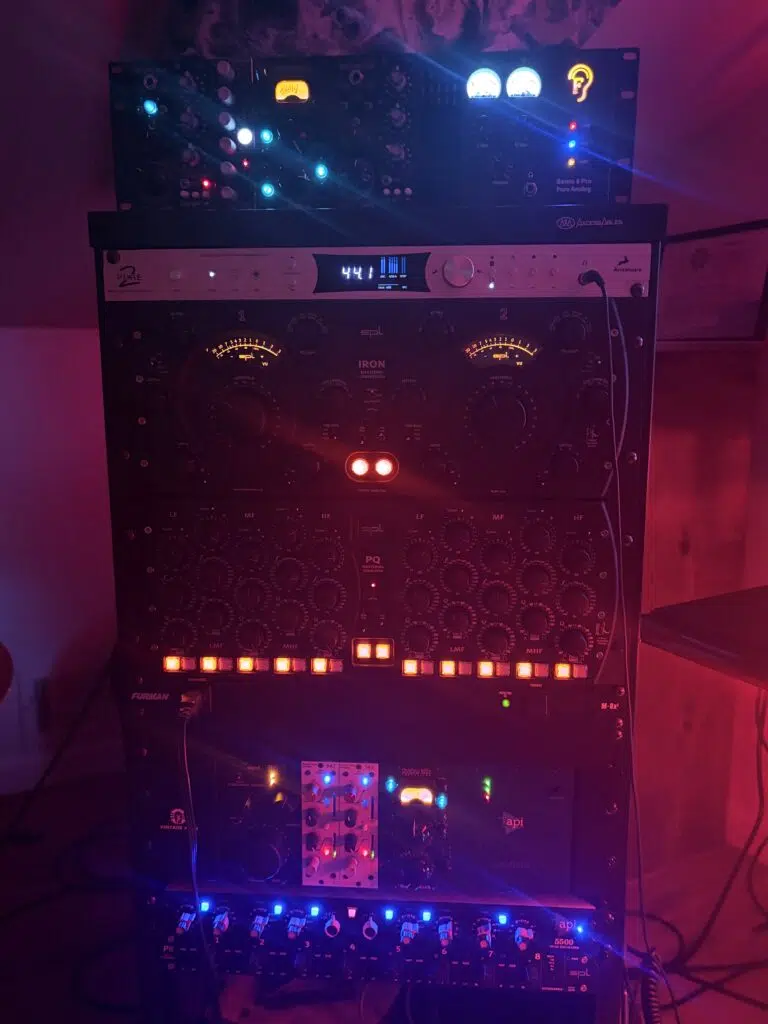
- SPL PQ — mastering equalizer
- SPL Iron — valve mastering compressor
- SPL BIG — stereo width
- API 5500 and API 550A — equalization
- Shadow Hills Dual Vandergraph — compression
- Rupert Neve Designs 542 — tape emulation
- Antelope Pure 2 — conversion
Why these boxes
Two families of tone, chosen they can be stacked or used separately. The SPL side runs on high-voltage rails, stays clean and sounds classy. The API side has the opposite temperament: proportional-Q equalization and a discrete op-amp bite that puts weight and forwardness into a mix. The Shadow Hills sits between them adding hi-fi transformer sheen. The 542 adds the tape behavior — the head bump, the soft top end, the cohesive compression.
I stack and voice this chain to fit each piece of music I master- the music is always my guide.
The room and the monitoring
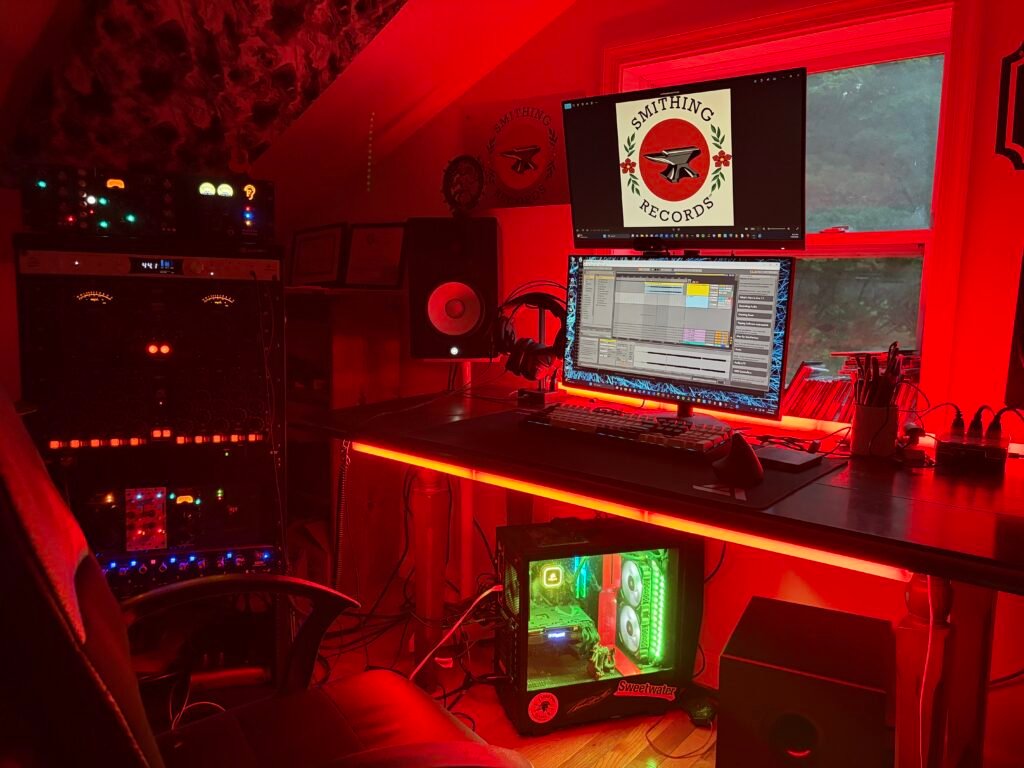
A mastering decision is only as trustworthy as the room it was made in. I took the utmost care in voicing this room so that the mastering results sound great….everywhere. Don’t underestimate this mighty room, it delivers the goods.
- Yamaha HS8 Pair & Yamaha HS8 Sub — Nearfield 2.1 Main Monitors
- AKG K240 Studio — Studio Headphones
- Sennheiser HD240 Pro — Studio Headphones
- Full Room Acoustic Treatment — Frequency Dampening & Absorption
- Studio Monitor & Headphone Calibration — Full Spectrum Flat Frequency Response
How I work
I thoroughly listen to the music with intensity. Then the chain gets built for that specific record and away we go!
All material on long form projects get worked on at once- it’s more cohensive and it leads to better translation of the artists message.
Mastering reveals what already is
Mastering enhances that stereo mix and brings it to the next level, but there are limits to what mastering can address. If I hear one, I will tell you right away. This is a list of the most frequent offenders:
- A mix already crushed by a limiter. Dynamics that were destroyed before the file was exported don’t come back. Keeping those dynamics allows the arrival at commercial volumes with the best sonic result
- Clipping, distortion, and bad edits. Damage in the source is damage in the master.
- Arrangement problems. If two instruments are fighting for the same space, usually this is best addressed in the mix.
- Phase problems and mono collapse. Some of it can be improved. Much of it has to be fixed in the mix.
Mastering is a dedication to the craft here, not a thing needed to keeps the lights on so you will always get any feedback straight with me.
What a project actually looks like
- You send a track for a free sample. It comes back mastered, no charge and no obligation. It’s yours to keep and listen to — it just isn’t cleared for release.
- If you want the record, you simply fulfill the attached invoice. No surprises on the invoice. Our invoices on free sample are at our current standard rates.
- The final masters are released to you. Payment comes before the full resolution files.
- Revisions open at that point. Two rounds of revision are included with every paid project, and they run from the moment the final masters land. If you go quiet after delivery, the master is treated as accepted after a short window — so if something’s wrong, say so.
Singles from $110. Most records leave here inside two weeks. Longer releases, hard release dates, catalogue work, and anything unusual get quoted individually rather than forced into a standard rate.
Full rates, turnaround, and terms →
Hear it on your own record
Every comparison on this page is someone else’s band. The only one that matters is yours.