
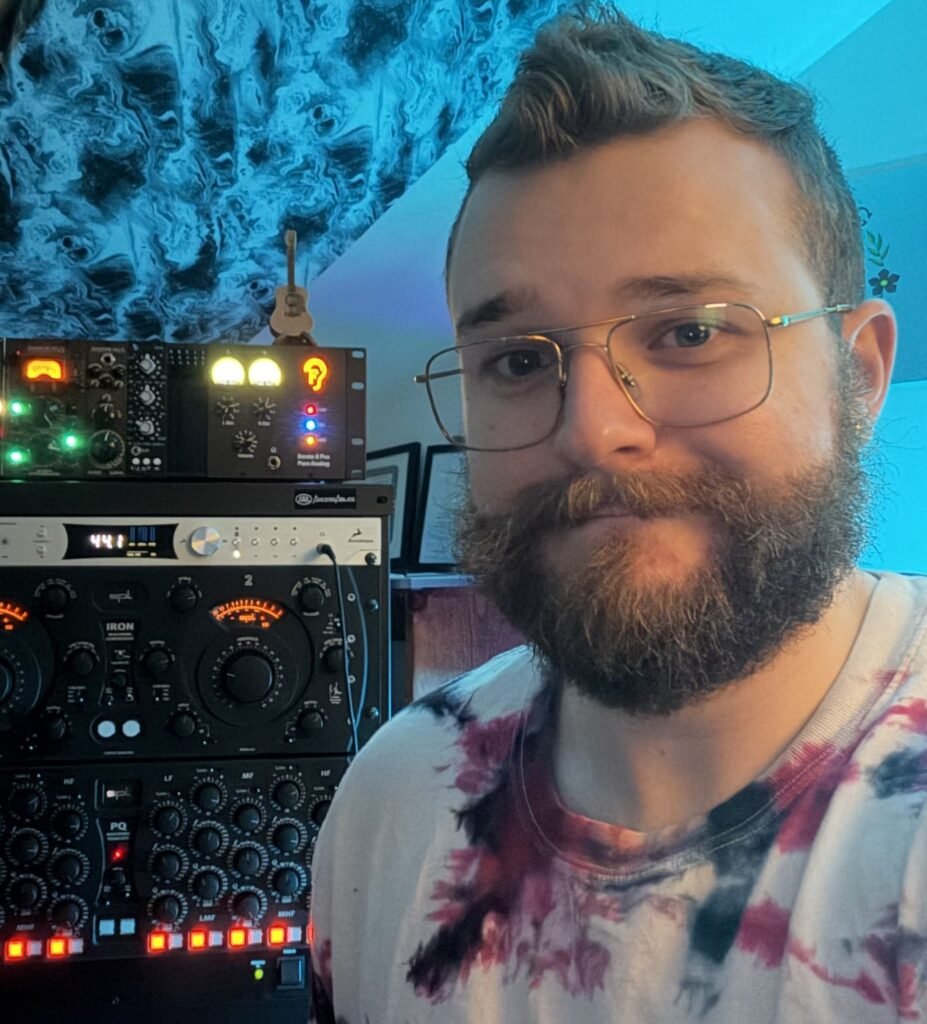
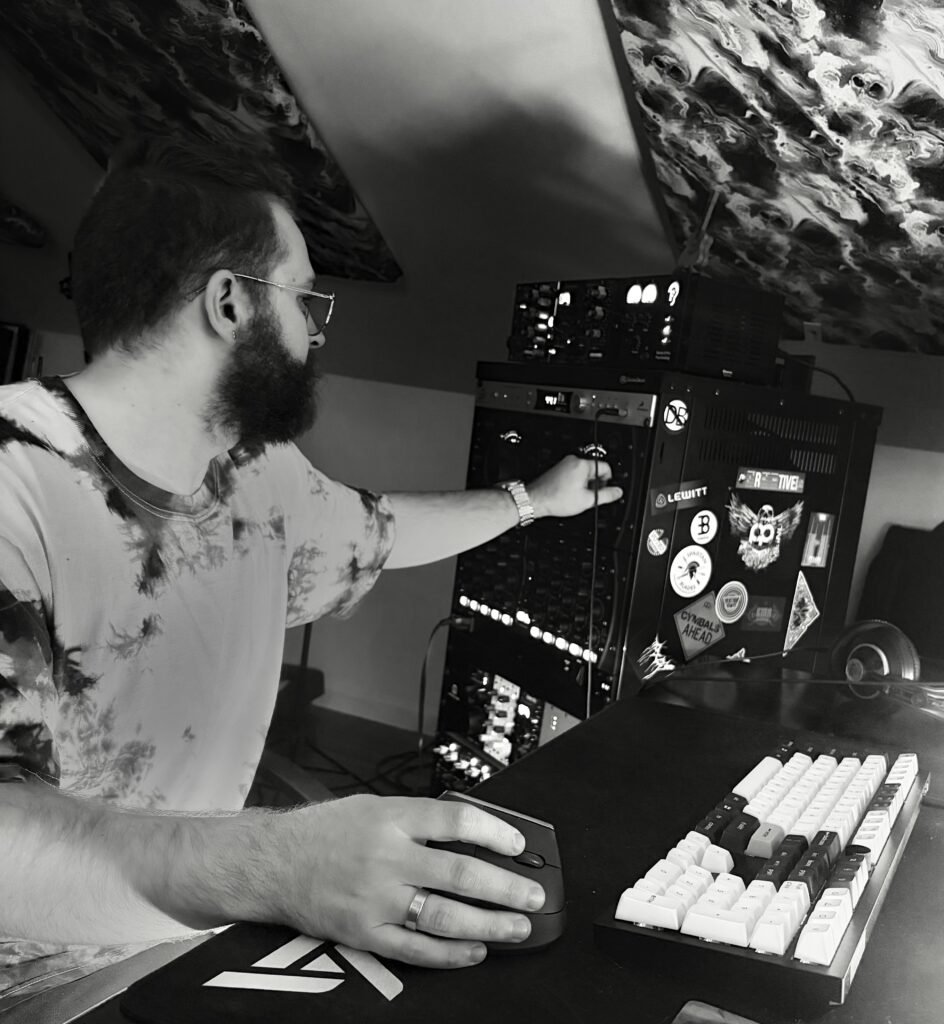
I’m Thaine Smith. I master records in the hills south of Ithaca, New York, on a chain I built one piece at a time.
I came up making metal and I still do, which means I’ve been on the other side of this handoff — sending someone a mix I’d lived inside and hoping they didn’t flatten it.
Why analog
I spent years chasing a sound I could hear in my head and couldn’t get onto a record.
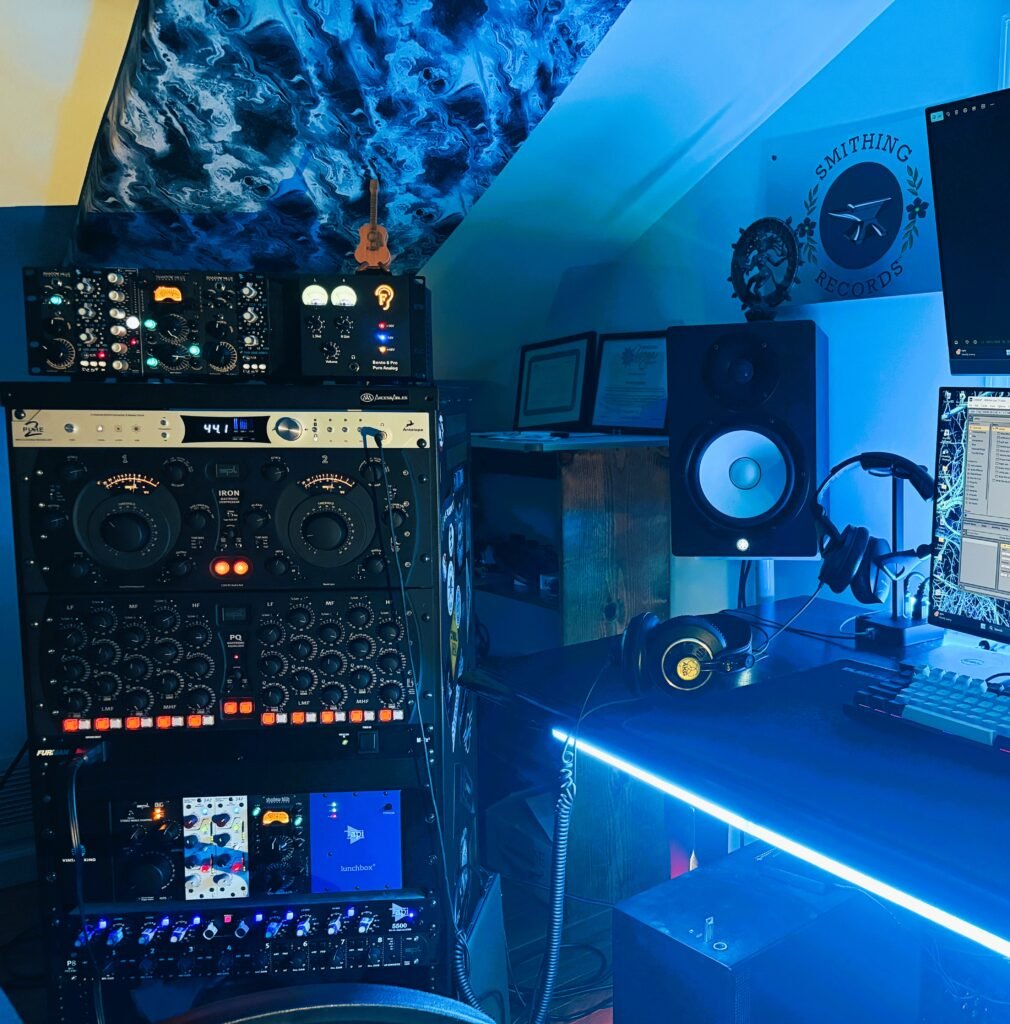
It made me obsessive. I studied mastering under Blake La Grange at Mastering.com rather than guessing at it, and I built the chain of my dreams one piece at a time. I’d worked out that neither one gets you there alone: gear without skill is an expensive way to make the same mistakes louder and skill without the tools is knowing exactly what you can’t reach.
The first time I ran my own music through the finished chain, I cried.
It was finally the thing I’d been hearing — not louder, not shinier. Just there. The song had been carrying that the whole time and I’d never been able to get it out.
That’s the whole reason this studio exists.
What smithing means
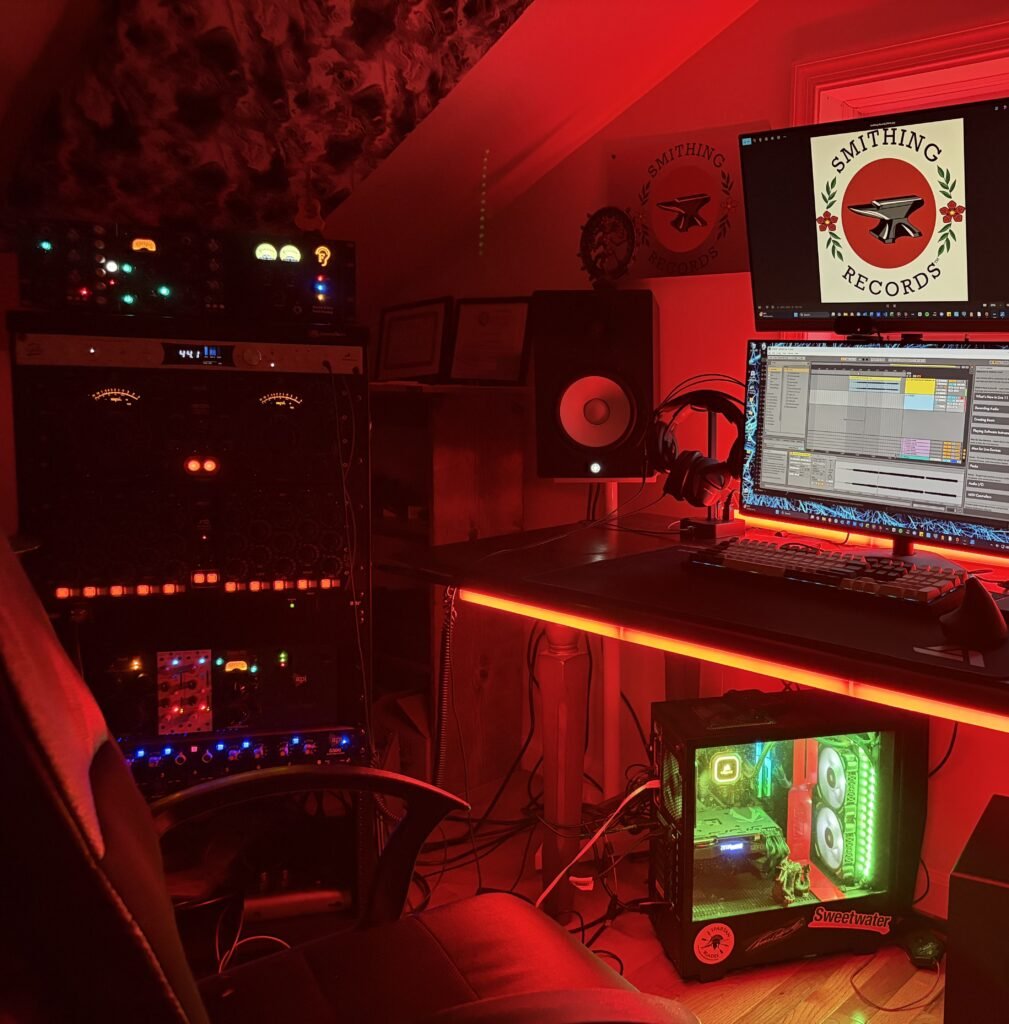
There’s a reason the logo is an anvil.
A smith doesn’t add anything to the iron. Everything the blade is going to be is already in the bar — the work is heat and pressure and knowing where to strike, until what was always in there comes out. You don’t invent the edge. You reveal it.
That’s mastering, done right. Your song already has its soul in it. It’s in the take where the vocal cracked, the guitar tone you spent a week finding, the way the drums push against the beat. My job isn’t to put emotion into your record. It’s to get everything out of the way that’s keeping you from feeling it.
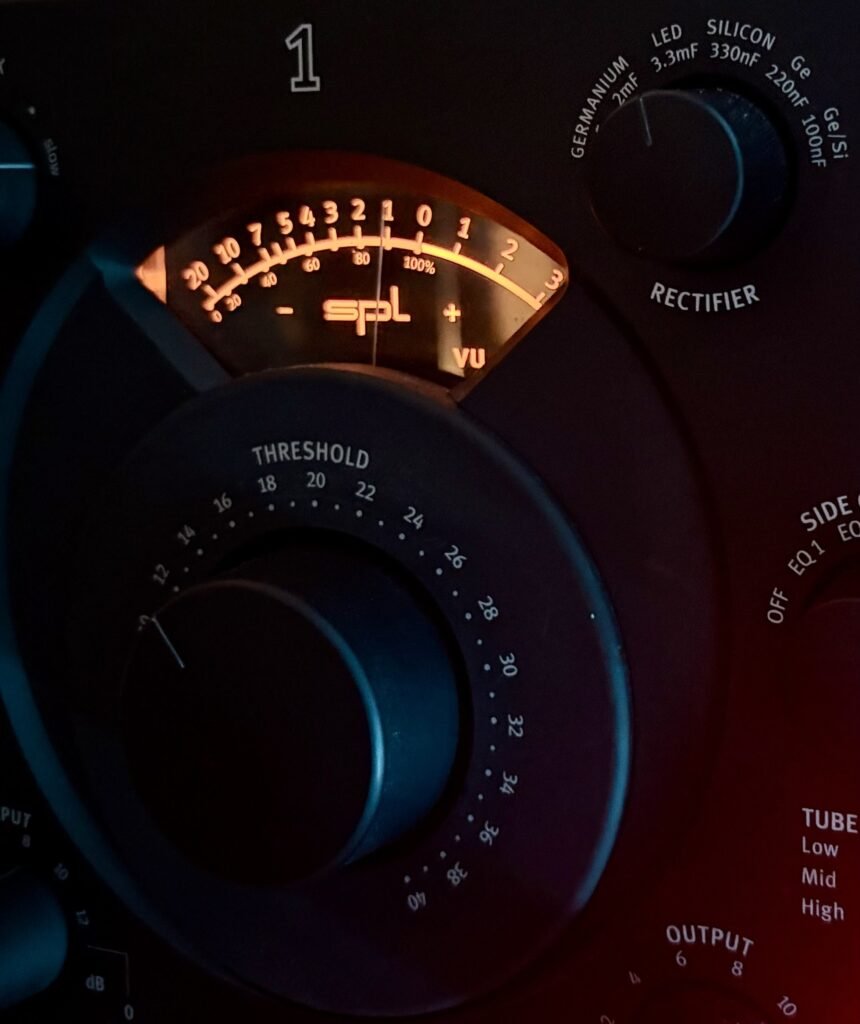
Analog does that better, in my hands. SPL for clarity, API for transient snap, Shadow Hills for transformer weight — every stage hardware, signal path short on purpose. Not because analog is a nostalgia trip, but because it moves me, and I can’t elevate something I can’t feel.
What I make
I write and record my own metal, jazz, and electronic music — four records out, and an EP that’s the closest thing to a mission statement I’ve got. Fourteen minutes, tracked and mixed here, run through circuits until it earned its grit. If you want to know what I hear as finished, that’s the fastest way to find out.
Metal is what I make. It isn’t all I master. The work doesn’t change with the genre — find what the song is already doing, and clear everything out of its way. A quiet record needs that as much as a loud one. Become one with the soul of the record and bring it to its fullest potential.
How I work
One master per song, built to hold up on any system it lands on — no separate loud version for the car, no platform-specific alternates. I’d rather spend that time on a single pass I’d defend anywhere.
Mastered in one pass, no revisions, wherever I can. That’s not a boast — it’s how I’d rather work. Commit, listen, and if it’s right, stop touching it.
I’ll also tell you the truth about your mix. Mastering enhances what you send me; it doesn’t rescue it. If something’s wrong upstream, you’ll hear it from me before I take your money — not after.
The honest part
Mastering isn’t my only work. I spend my weekdays as a finance manager at a hospital system, which is an unusual thing to admit on a studio page. I’m telling you because it’s the reason I can be straight with you: I don’t need your project to cover expenses, so I have no incentive to say yes to a record I can’t improve, or a project or partnership I am not excited out. Passion for elevating art is what drives this studio.
What it doesn’t mean is slow. Turnaround is four business days on a single and seven to ten on an album, confirmed in writing before I start. If I can’t hit it, I’ll say so before you send files.
Start with your ears
Send me a track and I’ll master it on the full chain, free. No commitment, no obligation. Decide from there.